
Asteroid Findings: The DNA Building Blocks Revealed Again
New research confirms the presence of DNA bases in asteroids, shedding light on life's building blocks. This discovery may deepen our understanding of life's origins on Earth.
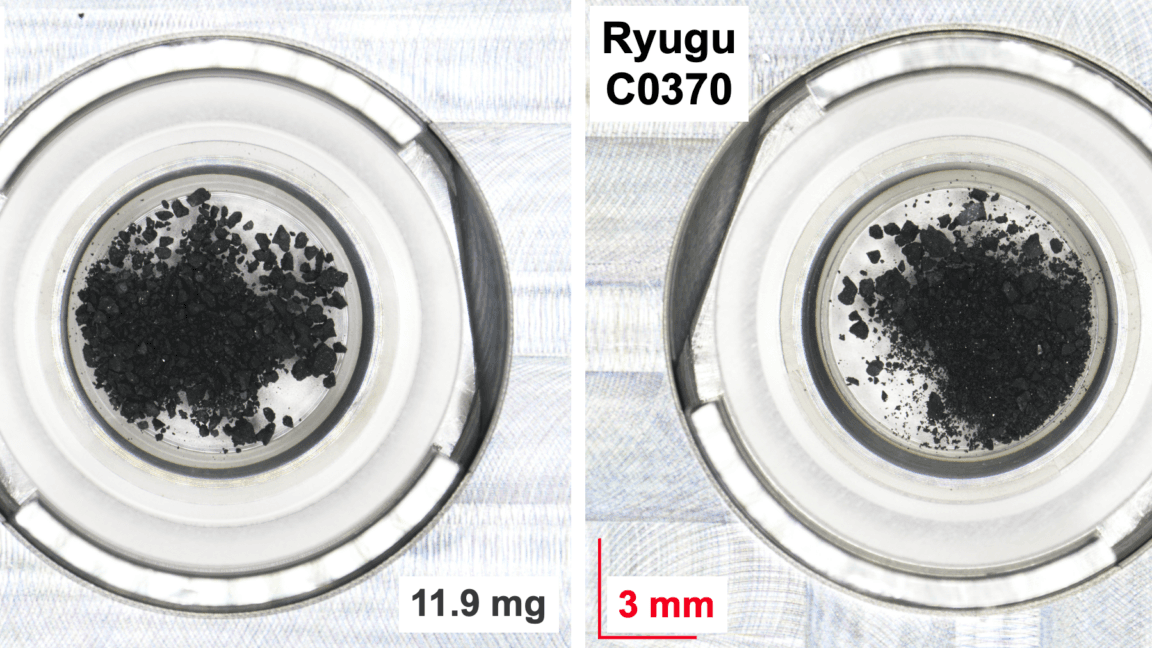
On Monday, a new study reported the detection of all four DNA bases on an asteroid, generating significant media attention. However, many reports overlooked the crucial word 'again,' as similar findings have been documented since 2011. Over the years, multiple confirmations and more rigorous investigations have followed. The latest research is less about the discovery of these bases in the asteroid Ryugu and more about resolving a previous enigma: earlier studies had failed to find these bases in Ryugu despite their presence in other asteroid samples.
Beyond the headlines, this research provides intriguing insights into how these DNA building blocks may have originated. Understanding their formation is vital for piecing together how the essential components for life arrived on Earth.
The study outlines the structural similarities between DNA and RNA, the two nucleic acids central to life. Both share a backbone composed of alternating sugars and phosphates; while the sugar differs between DNA and RNA, the backbone remains structurally identical. The unique identity of nucleic acids stems from four bases: adenine (A), thymine (T), cytosine (C), and guanine (G) in DNA, and adenine (A), uracil (U), cytosine (C), and guanine (G) in RNA. Each base is attached to the sugars in the backbone, and their sequence encodes genetic information, which is crucial for the development of life.
While these bases are not the sole requirement for life, they play a significant role, making the search for them beyond Earth a priority. The new paper highlights the success of these searches, noting the detection of the nucleic acid bases in three separate asteroids. It references a 2011 study that reported the identification of nucleic acid bases in meteorites, remnants of asteroids that survive entry into the Earth’s atmosphere, with similar findings emerging in the years since. Each of these asteroids also contained related molecules not utilized by contemporary life.
Despite the excitement surrounding these discoveries, the possibility remains that these bases could have formed from chemical reactions induced by atmospheric entry or resulted from contamination by terrestrial life. However, samples retrieved directly from asteroids, such as those collected by the OSIRIS-REx mission from the asteroid Bennu, confirmed the presence of these bases.
Interestingly, the majority of bases were not found in Ryugu, which was previously explored by the Hayabusa2 mission. While one base was detected, most were absent in initial tests. The current study includes additional tests using larger sample sizes and greater sensitivity, ultimately confirming the presence of all five bases, including the three common to both DNA and RNA as well as two specific types. This finding positions Ryugu alongside other asteroids as bearers of essential nucleic acid precursors.
The research goes beyond merely corroborating expected results. Nucleic acid bases exist in two forms: purines, which have two rings, and pyrimidines, which have a single ring. The formation chemistry of these bases differs, prompting researchers to analyze the concentrations of purines and pyrimidines across various asteroids. They discovered a correlation between the levels of these two classes of chemicals and the amounts of ammonia present in the asteroids, suggesting insights into the chemical reactions that produced these nucleotides.
This aspect of the study could prove to be the most significant. Extensive research has explored chemical reactions capable of generating nucleotides and other vital biochemicals under conditions likely present on early Earth. However, the conditions in space are markedly different, hinting at the potential for unique reactions. This information may refine our understanding of the types of reactions to investigate, enhancing our knowledge of possible prebiotic chemistry occurring in space.
It is essential to note that while biochemicals from space may not have been crucial for the emergence of life on Earth, some may degrade due to the heat of atmospheric entry, and it remains uncertain whether any survivors would be concentrated enough to initiate life. Nonetheless, the universe is vast, and the conditions found in space may be far more common than those that existed on early Earth. Thus, understanding the reactions that occur in asteroids could be highly relevant for exploring life elsewhere in the universe.